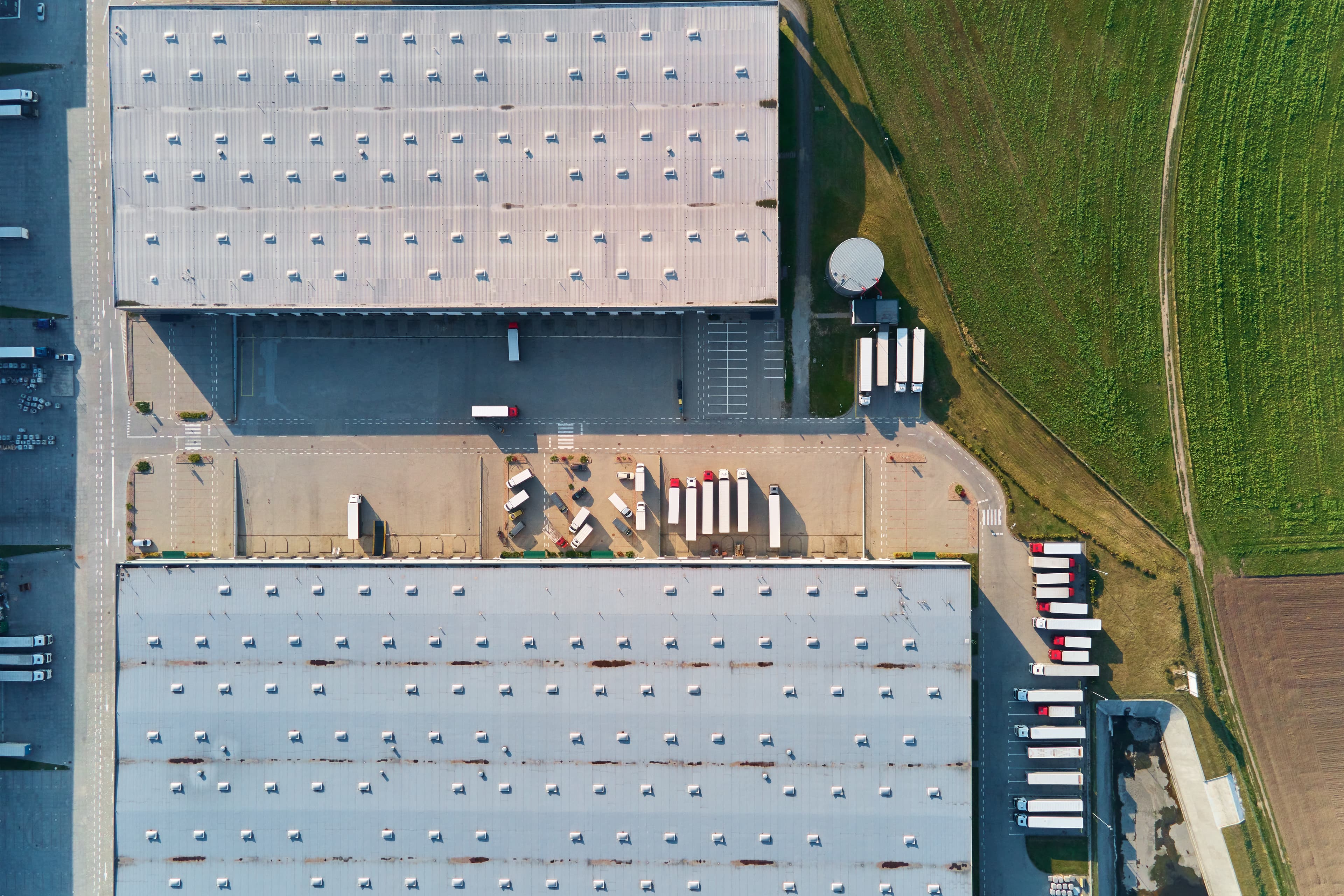
What's different about industrial roofing?
Scale, safety, and operations. Industrial roofs are measured in tens or hundreds of thousands of square feet. The work has to navigate active production, shipping schedules, and OSHA-regulated safety protocols. Material logistics, crew size, and project phasing look nothing like residential or small-commercial work.
On a 100,000 sq ft warehouse, a full system replacement might involve 8–14 weeks of phased work, multiple material deliveries, and a rotating crew managed against production schedules. Mid-project, the building is often still loading trucks, running production lines, and shipping product. Our scheduling, equipment staging, and safety protocols are designed for that reality.
We hold full liability and workers' comp insurance at industrial-project limits, follow OSHA fall-protection and confined-space protocols, and carry the documentation any compliance-conscious facility manager will ask for before we set foot on the property.
What industrial roofing systems do you install?
Single-ply membranes (TPO, EPDM, PVC) for most large flat roofs, modified bitumen for retrofit work, standing-seam metal for taller industrial profiles, and silicone restoration coatings to extend mid-life roofs without full replacement.
| System | Best fit | Typical lifespan |
|---|---|---|
| TPO single-ply | Energy-efficient new install on large flat roofs | 20–25 yr |
| EPDM (rubber) | Durable budget choice on stable substrate | 25–30 yr |
| PVC single-ply | Chemical-exposure roofs, food/beverage facilities | 20–30 yr |
| Modified bitumen | Retrofit over existing systems | 20 yr |
| Standing-seam metal | Tall industrial, long-life applications | 40–60 yr |
| Silicone restoration coating | Roofs at 60–80% of life — extension instead of replacement | 10–15 yr added |
How do you handle phased projects?
We section the roof into phases that match production realities — building wings, equipment zones, shipping schedules. Each phase is its own mini-project: dumpster placement, material staging, crew rotation, weatherproofing at section boundaries. We commit to phase dates in writing so building operations can plan around them.
- Pre-project walk-through with facility maintenance, EHS, and operations leads.
- Phase plan with specific date ranges per section, mapped to production and shipping calendars.
- Material staging plan that doesn't block dock doors, fire lanes, or fork-lift routes.
- Daily progress reports during active phases — facility management never out of the loop.
- Weatherproofing at every phase boundary so partially-completed sections are water-tight.
- Final acceptance and warranty registration at project completion.
What safety protocols do you follow?
OSHA-compliant fall protection on every roof, regardless of slope. Hot-work permits for any flame or torch application. Confined-space protocols where applicable. Daily safety briefings. Documented crew certifications available on request to your EHS team before the project starts.
We carry full liability insurance plus workers' compensation at industrial-project policy limits. We can provide our certificate of insurance, OSHA training certifications, and project-specific safety plan to your facility's EHS or risk management team before any crew arrives. If your facility has its own contractor onboarding requirements (drug screening, badge access, site orientation), we'll complete them.
We've worked on facilities with active heavy-equipment operations, food-grade requirements, and sensitive electronics — and we've passed the safety audits each one required. If you have specific compliance requirements, tell us at the estimate.
By the numbers
20,000–500,000+ sq ft
Industrial project size range
Phased scheduling
Standard for projects over 50,000 sq ft