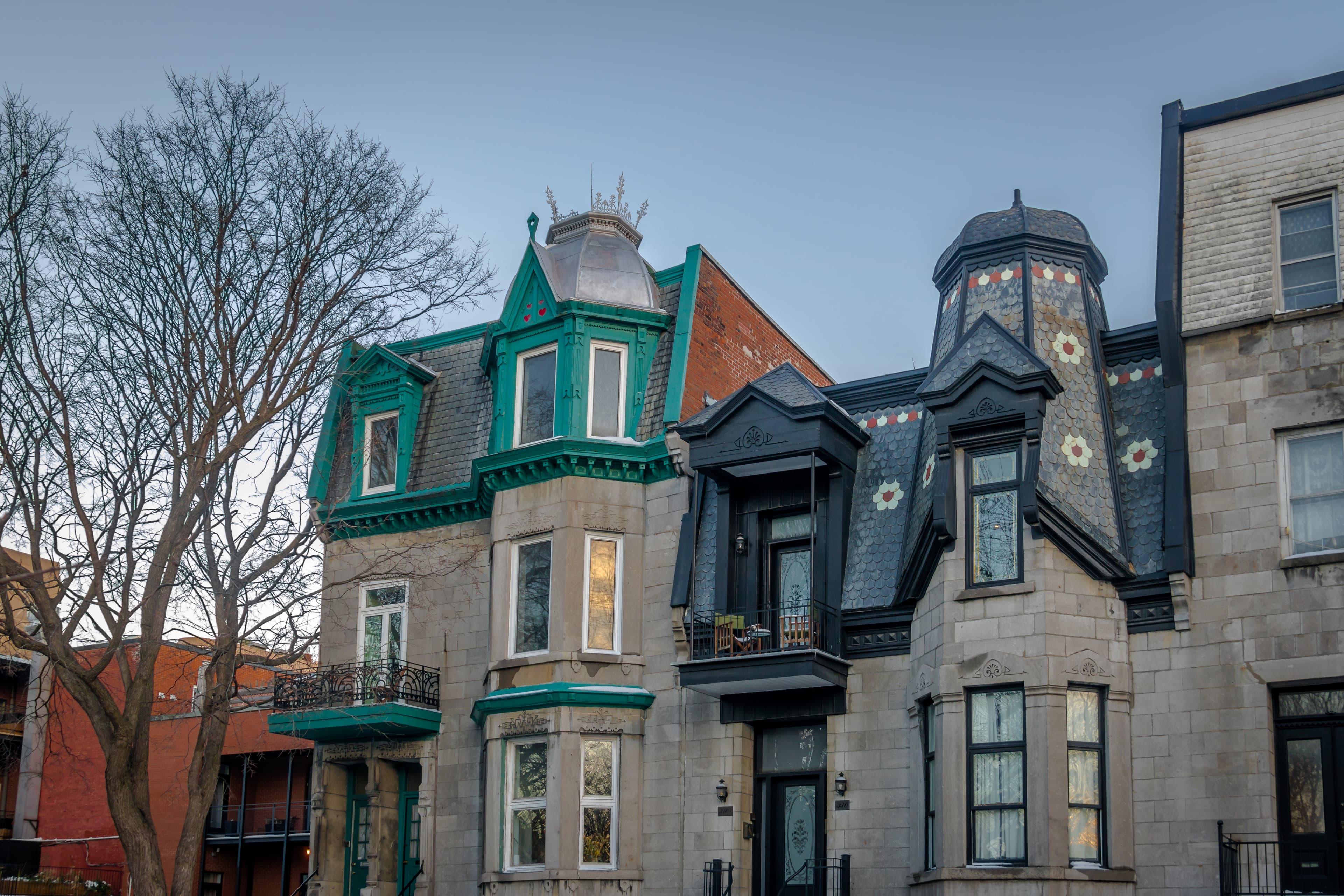
What makes roofing in St. Charles different?
Two parallel housing universes share the same zip code. East-side historic stock — French Colonial, Federal, Victorian — sits inside or near a preservation overlay. West-side subdivisions are post-1990 production housing under HOA architectural review. A roofer working in St. Charles needs to read which world a project falls into and adjust the entire approach.
Drive South Main Street and you're in 19th-century St. Charles — the city's National Register historic district where homes are evaluated for material and color appropriateness when visible exterior work is proposed. A few miles west along Highway K, you're in 21st-century St. Charles — production-builder subdivisions where the HOA architectural review board has a written palette of approved shingle lines and colors, and material substitutions need formal sign-off.
The roofing recommendations, the timeline, and even the conversation with the homeowner all change between those two worlds. We start every St. Charles estimate by understanding which side of the city the home sits on and what approvals will gate the project — historic preservation, HOA, or neither.
Working with St. Charles's historic district
Properties inside or contributing to the South Main Street historic district can be subject to Historic Preservation Commission review for visible material and color changes. Approval timelines vary; planning ahead saves weeks. Materials commonly favored on contributing properties include slate, designer asphalt mimicking historic profiles, and standing-seam metal in heritage colors.
- Permit office
- City of St. Charles Planning & Building Division (and St. Charles County Building Division for unincorporated areas)
- Historic district
- St. Charles National Register Historic District (South Main Street area)
- Notable codes & rules
- Historic preservation overlay covers parts of South Main Street; material and color changes can require Historic Preservation Commission review
- HOA architectural review boards govern most subdivision communities outside the historic core
If your home is within or contributing to the South Main Street historic district, plan the roofing project around approval timelines, not against them. We can attend Historic Preservation Commission meetings on your behalf when needed and provide manufacturer specs, color samples, and historical-context documentation in the format the commission expects.
The roofing styles common to St. Charles homes
St. Charles housing spans 200 years. The east-side historic core has French Colonial, Federal, and Victorian inventory; the west-side growth corridor is dominated by 1990s–2020s production housing in suburban traditional styles. Material recommendations differ dramatically between the two.
On a Federal-era home in Frenchtown, the right answer is rarely a 3-tab asphalt shingle — designer asphalt with a historic profile, or where budget allows, real or synthetic slate, will look correct on the home and pass preservation review. On a 2008 production house off Highway K, that same designer profile may not even be in the HOA-approved palette, and architectural asphalt in an HOA-listed color is the right call.
Dominant eras
- pre-1900 (historic Main Street district)
- 1950s–1970s mid-century inventory
- 1990s–2020s new construction on the western and northwestern sides
Common styles
- French Colonial
- Federal
- Greek Revival
- Victorian
- modern ranch and suburban traditional
Materials approved for historic St. Charles properties
Historic-district homes typically take materials that match the era and original specification. Below are the categories most commonly approved for visible roof replacements on contributing properties — owner-verify the specific manufacturer line and color with the Historic Preservation Commission for your property.
| Material | Suitability | Notes |
|---|---|---|
| Real slate | Excellent for Federal/Victorian properties | Heaviest, premium pricing — confirms decking load capacity |
| Synthetic slate / composite | Excellent visual match | Lighter weight, often pre-approved for historic context |
| Designer asphalt (historic profile) | Good for budget-conscious projects | Manufacturer line and color must match approved palette |
| Standing-seam metal (heritage color) | Era-appropriate for some Federal-style stock | Color choice critical for commission review |
| Cedar shake | Period-appropriate for some Victorian inventory | Maintenance and ventilation requirements specific to material |
Neighborhoods we serve in St. Charles
- Historic Main Street District
Pre-1900 commercial and residential structures along South Main Street; protected by St. Charles's preservation overlay.
- Frenchtown
Original French Colonial settlement north of the historic district; mix of restored historic homes and infill construction.
- New Town at St. Charles
Master-planned traditional-neighborhood development on the city's east side with strict architectural review board.
- West St. Charles / Highway K corridor
1990s–2020s subdivisions along Highway K, dominated by HOA-governed asphalt-shingle roofs.
Our process for St. Charles projects
Approval-aware scheduling. We identify upfront whether your project needs historic-preservation review, HOA architectural-board sign-off, both, or neither — and build that timeline into the contract before tear-off is scheduled.
- 1
Identify the approval path
Historic preservation? HOA? Both? Neither? We figure this out at the estimate, not after.
- 2
Prepare submission package
Manufacturer specs, color samples, historical context, photos — formatted to what the commission or HOA expects.
- 3
Schedule around the calendar
Approval cycles can run 1–4+ weeks. We schedule the install to follow approval, not race it.
- 4
Install with appropriate craft
Historic-context detailing where applicable. Visible flashings, ridge profiles, and seam alignments treated as visible work — because they are.