Belleville storm history and roof damage patterns
Belleville sits inside southern Illinois's active severe-weather corridor. Spring tornado risk peaks April–June; hail events are common across the season; and major events drive widespread insurance-claim work across the Metro East simultaneously.
Spring (recurring) · tornado
Southern Illinois tornado window peaks April–June. Belleville and the broader Metro East have a documented history of tornado events (specific dates and EF ratings: owner-verify).
For your roof: Tornado damage often hides under apparently intact shingles — wind-driven structural damage can require deeper inspection of decking, framing, and tie-downs, not just the visible surface.
Spring (recurring) · hail
Hail events frequently accompany Metro East severe weather, producing widespread shingle damage in subdivisions where uniform installations all show damage at once.
For your roof: Insurance-claim volume spikes after major hail. Filing early matters — the 12-month claim window starts ticking on the storm date.
Summer (recurring) · straight-line wind
Derecho and straight-line wind events have historically caused tree-fall and wind damage across Belleville (specific events: owner-verify).
For your roof: Tree-strike damage and wind-lifted shingles concentrate on storm-leading-edge slopes; document with photos before any cleanup.
Working with Belleville insurance adjusters
After a major storm event, Belleville roofing work concentrates around insurance claims. Contractors who can document damage to carrier-acceptable standards, meet adjusters on-site, and supplement scope-of-loss when warranted produce better outcomes than pure tear-off-and-install crews.
Illinois claim handling follows Illinois rules. The on-site adjuster process feels familiar to anyone who's been through a Missouri-side claim, but back-end timelines and dispute processes go through the Illinois Department of Insurance rather than Missouri DOI. We meet adjusters on either side of the river routinely.
Common scope-of-loss conversations: matching shingles when only one slope is approved (often we can supplement for full-roof replacement when matching can't be achieved), code-required upgrades like ice-and-water shield not in the initial scope, and decking damage discovered during tear-off.
Belleville's historic brick homes and their roofing needs
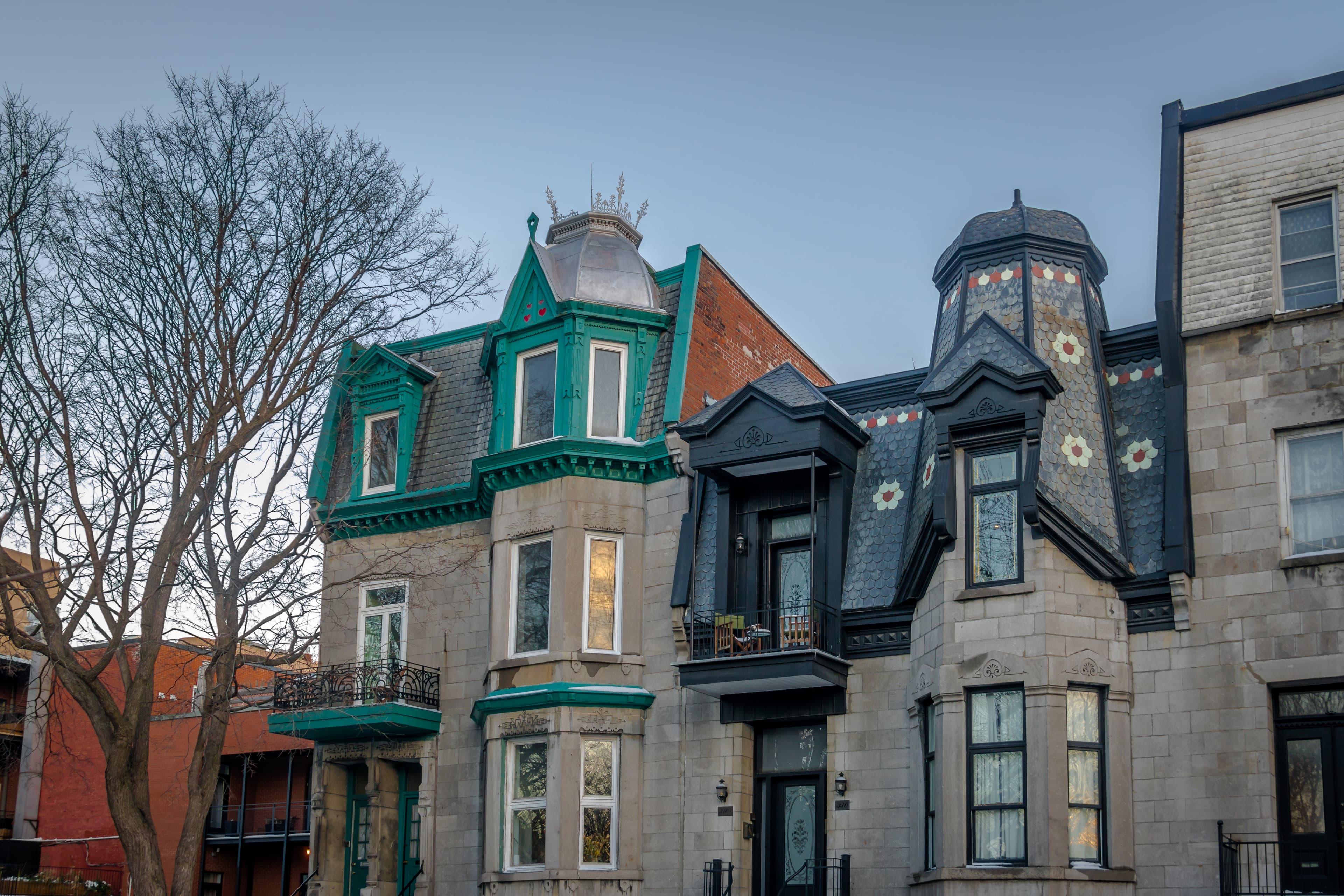
Federally-registered historic districts in downtown Belleville hold significant 19th-century brick stock — Italianate, Victorian, American Foursquare. These homes often have built-in gutters, parapet walls, flat-roof penthouse sections, and detailing that doesn't apply to suburban asphalt work.
Roofing 19th-century brick stock requires specialty knowledge: built-in box gutters that need lining or replacement, parapet flashings that fail differently than open-eave installations, flat-roof penthouse sections (often EPDM or modified bitumen) that are different systems from the main asphalt roof. Pricing and scope on these homes look nothing like a typical subdivision quote.
Dominant eras
- pre-1900 historic downtown brick stock
- early-1900s through mid-century brick bungalows and two-story frame
- 1970s–2010s subdivision additions
Common styles
- Italianate and Victorian brick (downtown)
- American Foursquare
- Mid-century brick ranch
- production-builder colonial in newer subdivisions
Permit and code considerations in Belleville
- Permit office
- City of Belleville Building & Zoning Department
- Historic district
- Multiple — including West Main Street Historic District and Old Belleville Historic District
- Notable codes & rules
- Multiple federally-registered historic districts in downtown — material and color changes can be subject to commission review
- Illinois roofing licensure required (contractor must hold IDFPR license)
- Insurance-claim work governed by Illinois adjusting rules
Inside the West Main Street historic district and Old Belleville historic district, visible material and color changes can be subject to historic preservation review. Outside the historic core, standard permit-and-inspect process applies. We handle both.
Neighborhoods we serve
- Belleville Historic Districts
Three federally-registered historic districts in the downtown core, including West Main Street and Old Belleville, with 19th- and early-20th-century brick stock.
- West Belleville
Older established neighborhoods west of the historic core; mature trees and pre-WWII brick and frame homes.
- Northwest growth corridor
1970s–2010s subdivisions on the city's northern and northwestern sides; mostly asphalt-shingle production housing.
- Swansea border / South Belleville
Mixed older and newer housing approaching the Swansea border; includes mid-century ranch and infill.
Our storm response process for Belleville homes
- 1
Same-day tarp
Active leak or open hole? We tarp during business hours to stop further water entry.
- 2
Inspection + documentation
On-roof photos, written summary, and damage assessment formatted for your insurance file.
- 3
Adjuster meeting
We meet your Illinois-side adjuster on-site to ensure scope of loss matches actual damage.
- 4
Restoration
Full repair or replacement scheduled. Period-appropriate materials for historic stock; standard architectural for subdivisions.